Case Study
Multi-Agent Group Sales Automation
A multi-agent AI pipeline that automated lead discovery, qualification, availability checks, scoring, outreach preparation, and human review.
Outcome
Reduced a manual workflow from hours to under 10 minutes while keeping final review in human hands.
- Project Type
- Multi-agent AI and sales operations automation
- My Role
- Product design, frontend implementation, workflow integration, and demo storytelling
- Users
- Group sales managers and operations staff
- Key Result
- Reduced a manual workflow from hours to under 10 minutes
System at a Glance
- 1Lead Discovery
- 2Qualification
- 3Availability
- 4Scoring
- 5Outreach
- 6Human Review
Overview
This project turned a manual group sales process into an AI-assisted operating workflow. The system discovers event-based lead opportunities, qualifies them, checks site availability, scores priority, prepares outreach, and presents the results in a dashboard for human review.
Business Problem
The original workflow required repeated manual effort across lead discovery, routing, qualification, availability review, and outbound email preparation.
That made the process difficult to scale and made it harder for a sales manager to see the status of each opportunity from discovery through outreach.
Original Manual Process
- Search for relevant outdoor events and group opportunities
- Decide whether an opportunity looked like a true group lead
- Match the lead to the correct property
- Check whether the property had enough site availability
- Prioritize stronger opportunities
- Draft different outbound email responses
AI Workflow
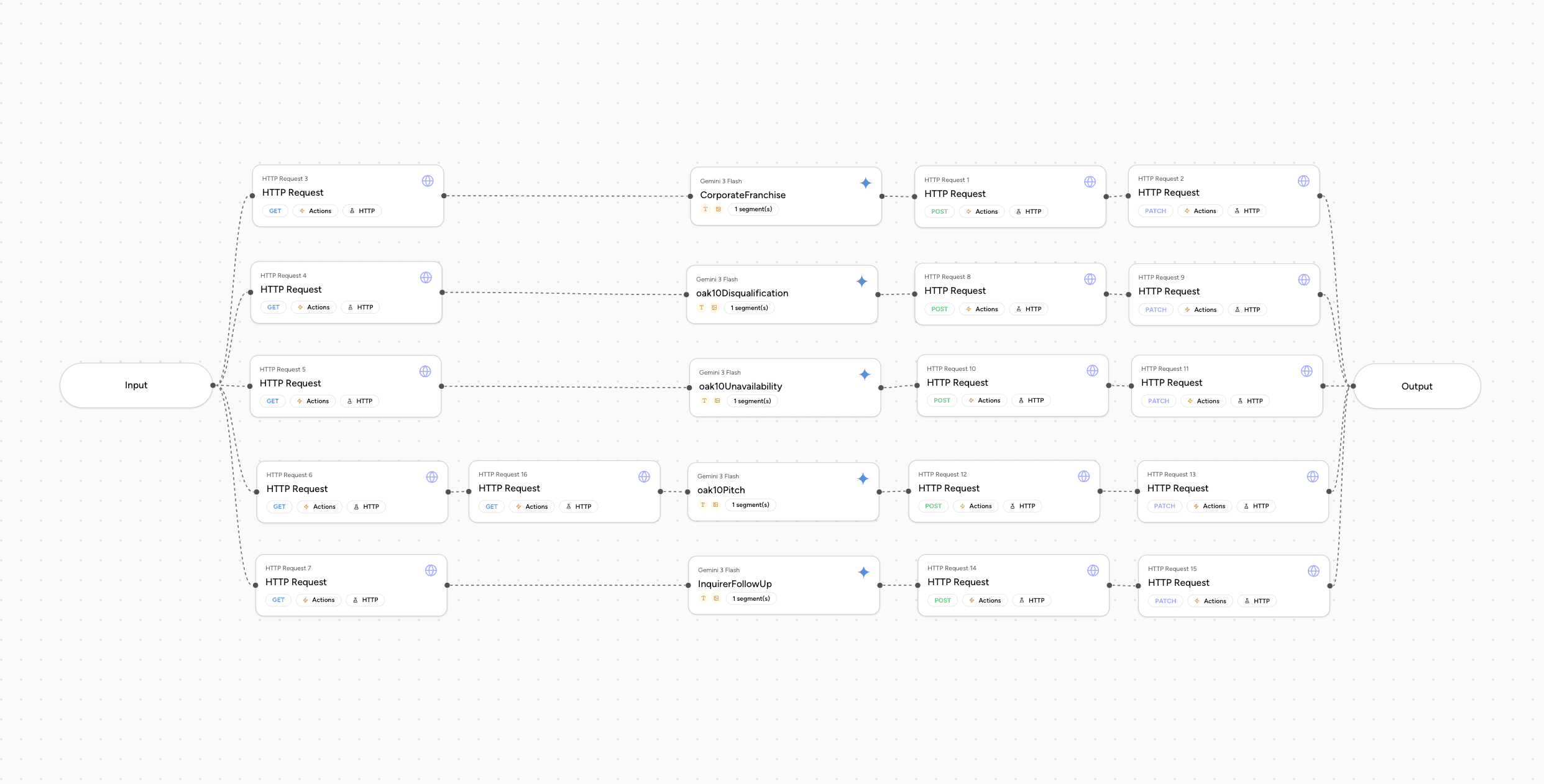
The workflow uses multiple agents to break the business process into discrete stages. Each stage produces structured data that can be reviewed, stored, and surfaced in the dashboard.
Multi-Agent Architecture
- Lead discovery extracts event opportunities and matches them to properties
- Qualification reviews the most relevant pilot leads
- Availability checks whether the matched property can support the requested stay
- Scoring labels qualified and available leads by priority
- Outreach drafting creates reviewable email drafts based on lead path and outcome
Dashboard and Human Review
The dashboard acts as the review and control surface for the AI workflow. It presents lead records, scoring, availability, and draft outreach so the sales manager can make the final decision.
My Contributions
- Built the dashboard UI and pipeline monitoring experience
- Structured how agent outputs appear in the interface
- Connected dashboard views to Supabase data
- Moved Airia execution behind server-side routes to protect API keys
- Created a presentation walkthrough mode to explain the agent flow
- Improved pipeline trigger handling and post-run refresh behavior
Technical Challenges
- Securing pipeline execution so credentials were not exposed in the browser
- Passing runtime input into the pipeline instead of relying on hardcoded values
- Supporting both local Express routes and hosted serverless routes
- Handling cases where the pipeline continued after a timeout or non-JSON response
- Making a complex agent process understandable to non-technical stakeholders
Business Impact
The system gave the group sales workflow a central place to review discovered leads, understand routing and qualification, access draft outreach faster, and preserve human approval before action.
Lessons Learned
The strongest AI workflow was not the most autonomous one. The useful pattern was automation plus a clear review surface: discover and structure the work with agents, then give humans a reliable place to inspect and decide.
Technologies and Capabilities
Outcome
- Reduced a manual process from hours to under 10 minutes
- Created a central dashboard for lead review and pipeline visibility
- Supported human review of outbound drafts
- Made a multi-agent workflow explainable for stakeholder presentations